സാർണിയ · ലാംബ്ടൺ
Sarnia, where Lake Huron meets the river.
Our new home has a remarkable story: an ancient gathering place, the birth of North America's oil industry, and a river that carries the Great Lakes to the sea.
How Canada became a country.
The first peoples
First Nations lived on this land for thousands of years before Europeans arrived. Around Sarnia, the Anishinaabe peoples (Ojibwe, Odawa and Potawatomi) have been here since long before any border was drawn.
Upper and Lower Canada
Britain divided the colony of Quebec into Upper Canada, roughly today's Ontario, and Lower Canada. In 1841 they were united as the Province of Canada, with Upper Canada renamed Canada West.
Canada is born
On 1 July 1867 the British North America Act created the Dominion of Canada from four provinces: Nova Scotia, New Brunswick, Quebec and Ontario, which grew out of Canada West. 1 July is celebrated every year as Canada Day.
Lambton County, Southwestern Ontario.
Sarnia is the largest city in Lambton County, at the southern tip of Lake Huron. The county is named after John George Lambton, 1st Earl of Durham, a British statesman whose ideas helped shape how Canada is governed.
The man behind the name.
John George Lambton (1792–1840), known as Lord Durham, was a British politician sent to the Canadian colonies in 1838 as Governor General, after rebellions broke out in Upper and Lower Canada in 1837.
His Durham Report of 1839 recommended joining Upper and Lower Canada into one province, which happened with the Act of Union in 1840, and giving the colony responsible government: leaders answerable to the people's elected assembly. That idea became a foundation of Canadian democracy.
When the county was created in 1849, it was given his family name, Lambton.
Dictionary of Canadian Biography · Lambton County: 175 years
Treaty 29
The Huron Tract Purchase, signed 10 July 1827, covered about 2.2 million acres and set aside reserves including one at Sarnia.
A new county
Lambton was created in 1849, first joined with Kent County, and became a county on its own in 1852.
Eleven municipalities
Sarnia, Point Edward, Petrolia, Oil Springs, Lambton Shores, St. Clair, Plympton-Wyoming, Enniskillen, Warwick, Brooke-Alvinston and Dawn-Euphemia. The county seat is in Wyoming.
The county recognises three First Nations: Aamjiwnaang, Bkejwanong (Walpole Island) and Kettle & Stony Point. Ontario treaties map
The story of Sarnia.
Aamjiwnaang
An Ojibwe word for "an important gathering place." The Aamjiwnaang First Nation still lives here, beside the city that grew around it.
The Rapids becomes Port Sarnia
Settlers called the place "The Rapids." In 1836 it was renamed Port Sarnia, a name proposed by Sir John Colborne, a former governor of Guernsey: Sarnia is Guernsey's Latin name.
Town, then city
Sarnia became a town by an act of 1856 and a city on 7 May 1914. It joined with the Town of Clearwater in 1991.
Under the river
The Grand Trunk's St. Clair Tunnel, the first international submarine railway tunnel in North America, linked Sarnia and Port Huron.
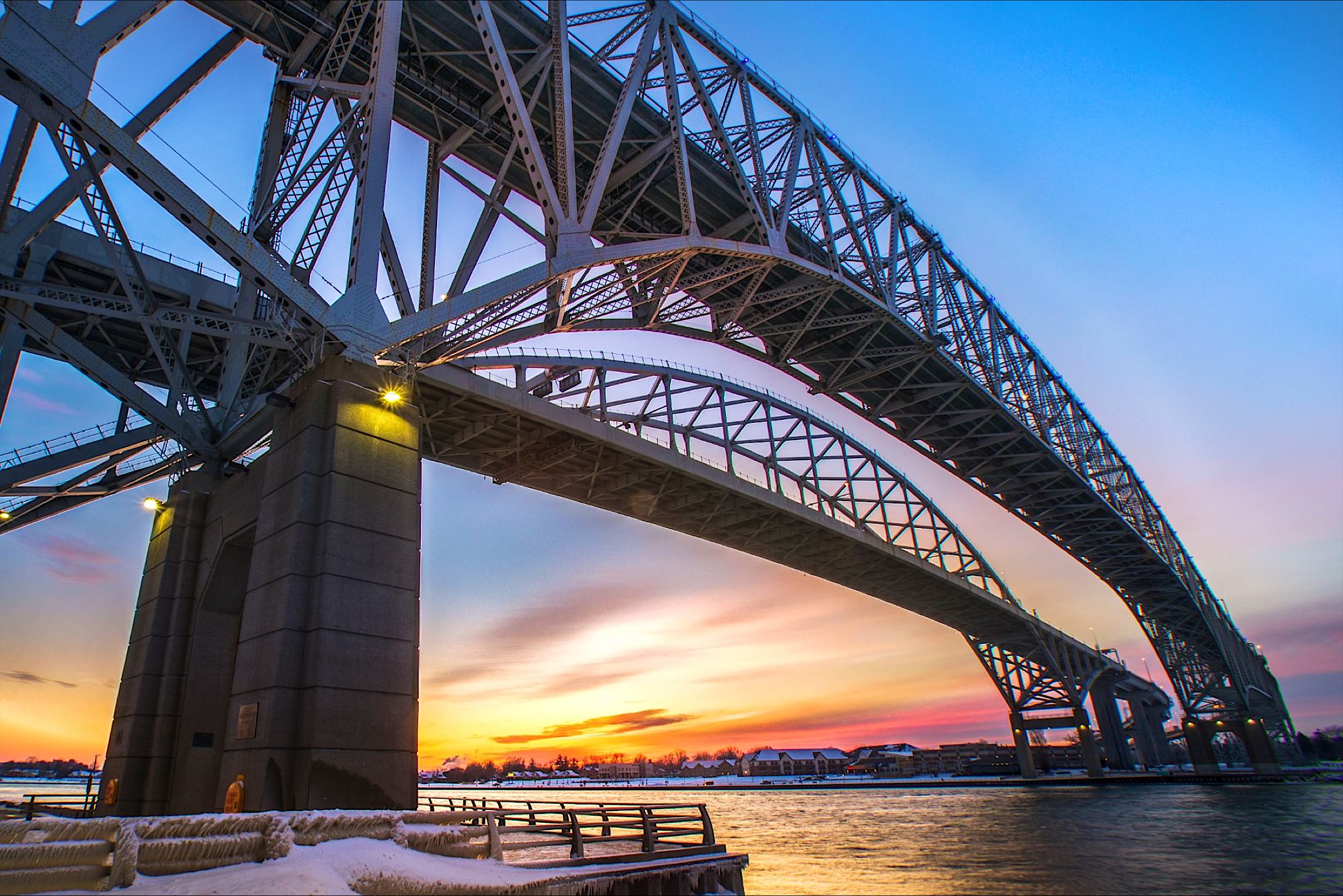
The Blue Water Bridge
Opened in October 1938 between Point Edward and Port Huron, Michigan. A second span opened in 1997.
Polymer and the $10 bill
Polymer Corporation, a Crown corporation, made synthetic rubber here for the Second World War. Its plant was so iconic that it appeared on Canada's $10 note from 1971 to 1989. Today the area is known as Chemical Valley.
Great Lakes ships pass by Sarnia.
Great Lakes freighters pass Sarnia day and night on the St. Clair River. Watching them glide under the Blue Water Bridge is a local pastime.
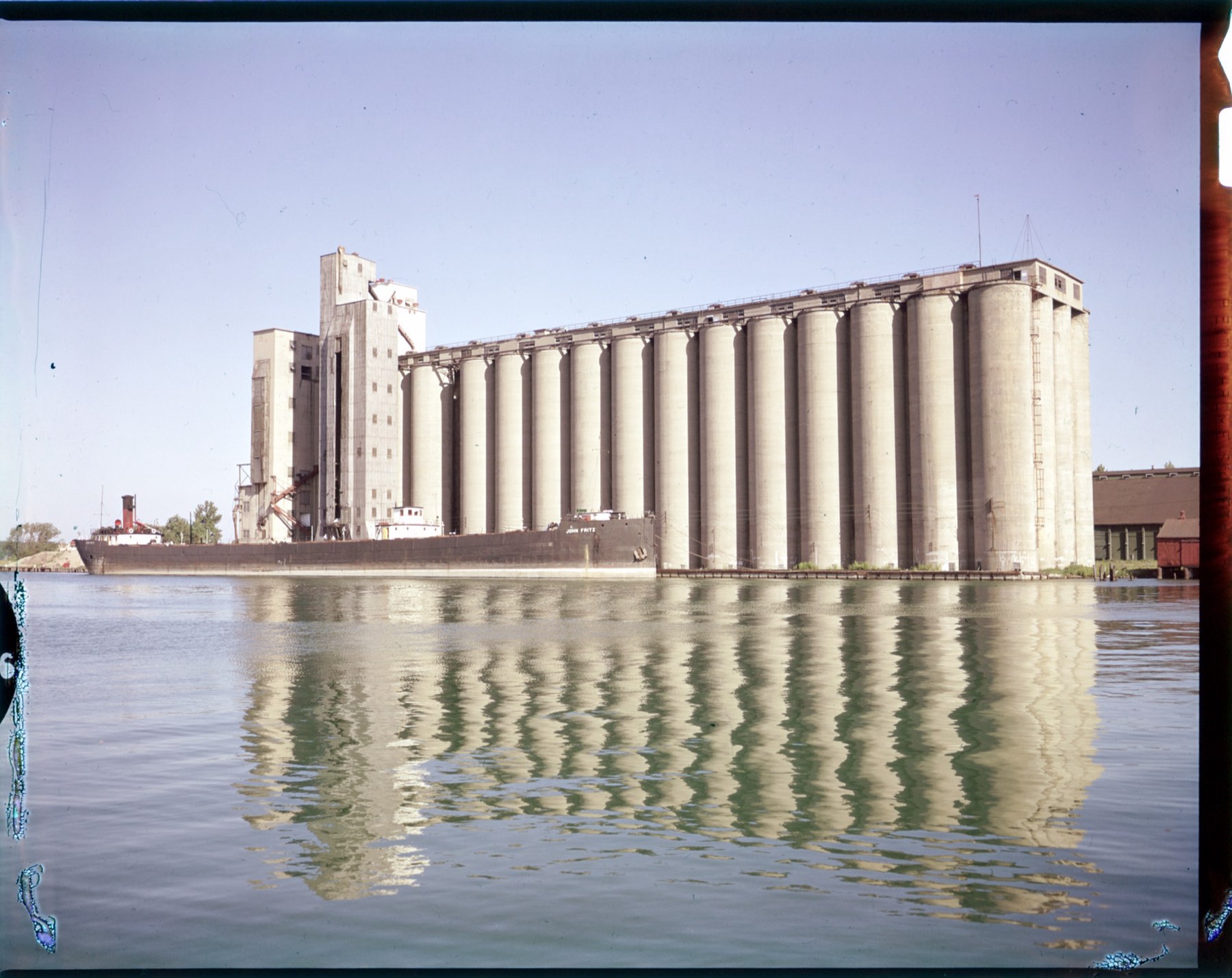
Sarnia Harbour
Owned by the City since 2014. Freighters berth here for the winter, beside the Cargill grain elevator.
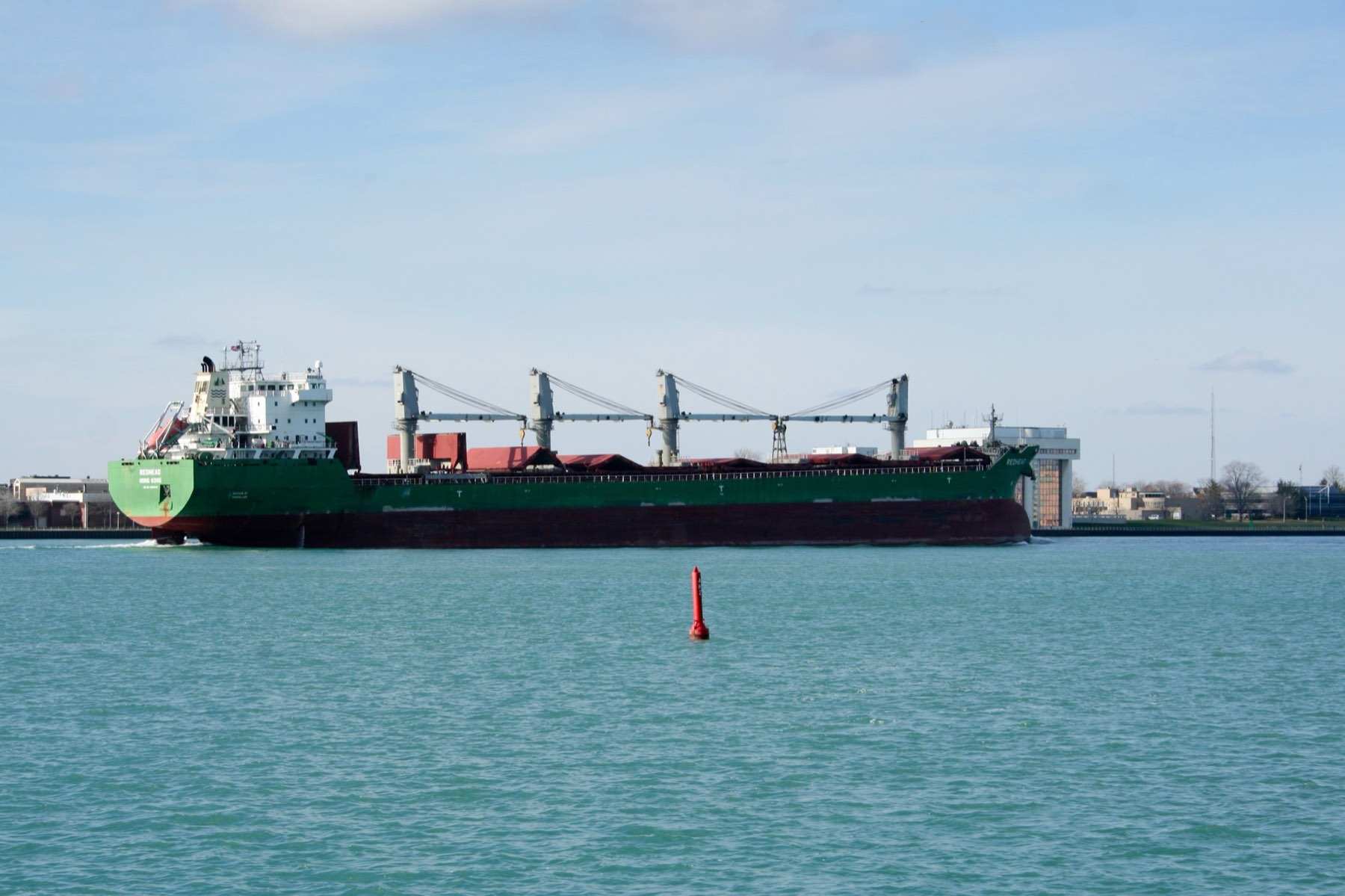
The St. Clair River
The link between Lake Huron and Lake St. Clair, carrying ships through the heart of the Great Lakes.
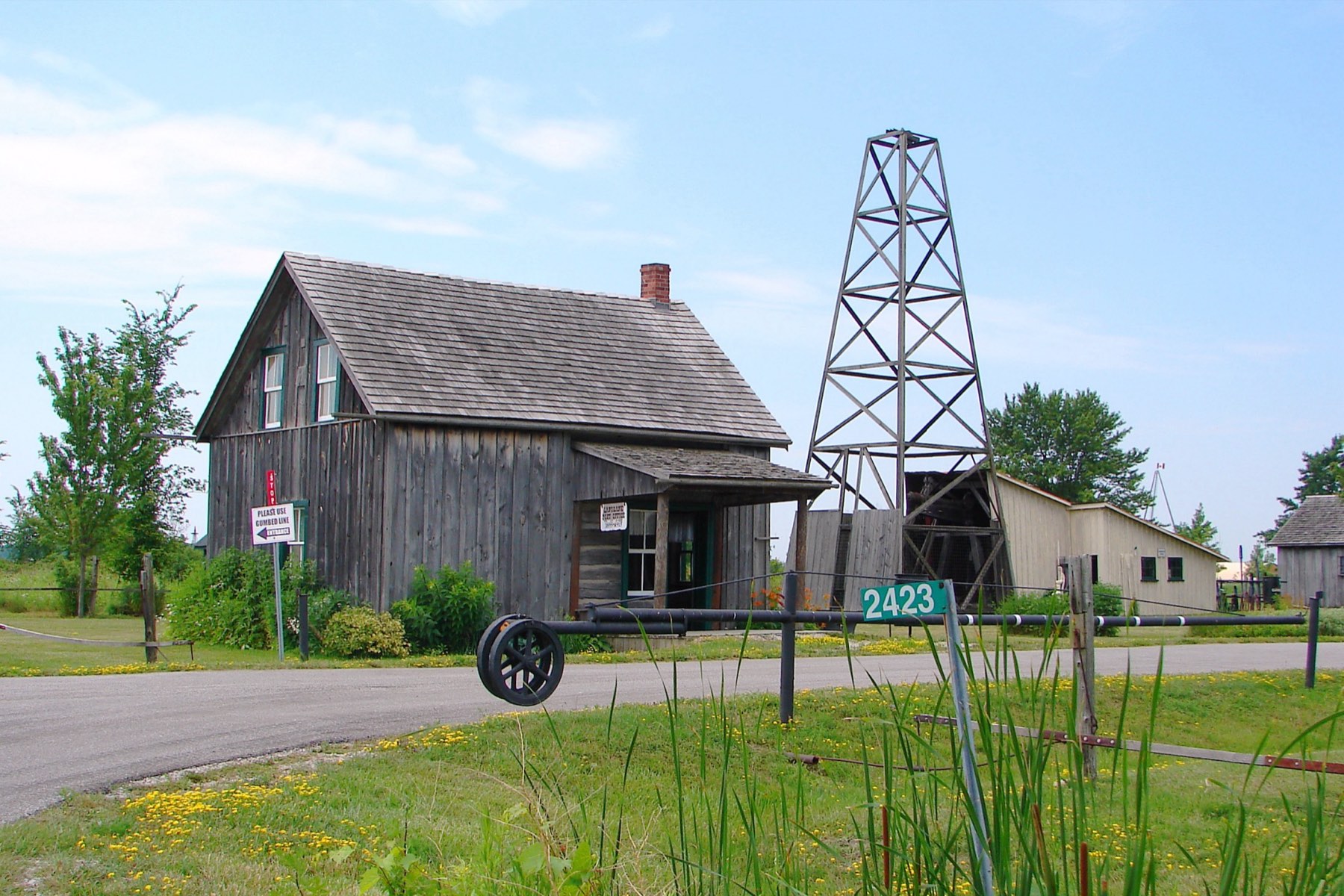 Oil Springs
Where North America's oil began.
In 1858, James Miller Williams hand-dug a well at Oil Springs, south-east of Sarnia. It is honoured by Parks Canada as the First Commercial Oil Field National Historic Site. In 1862 John Shaw's well produced one of the first great gushers.
The Oil Museum of Canada, opened in 1960 on the original site, tells the story.
Nearby, the Fairbank Oil fields have been run by one family since 1861, still using 19th-century "jerker line" equipment every day. In their words, no other operating oil field in the world dates back this far.
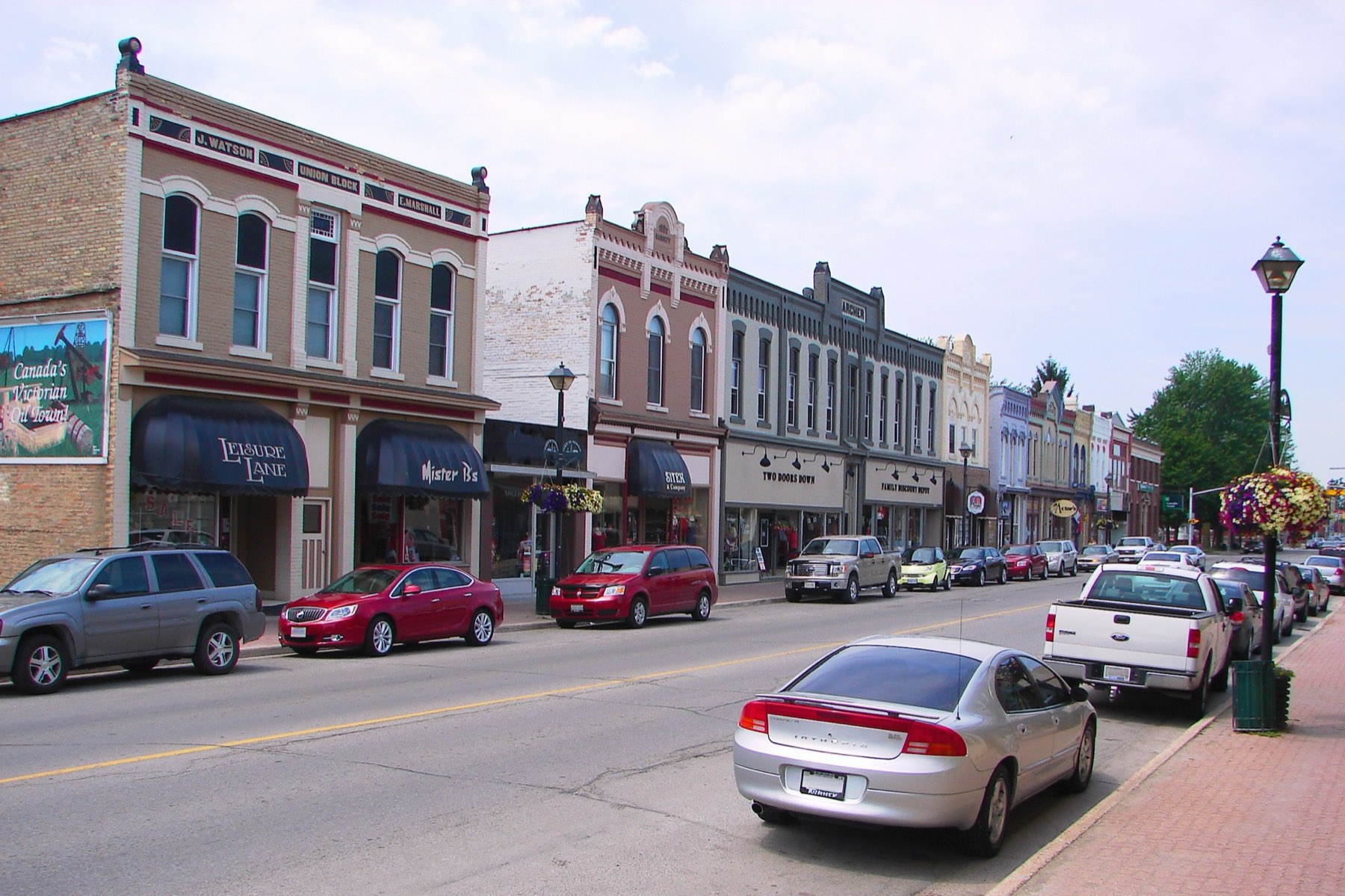 Petrolia
Canada's Victorian Oil Town.
Oil money built Petrolia's grand brick streets. From 1873 its drillers, the "Hard Oilers," carried their skills to oil fields around the world.
Victoria Hall, opened in 1889, is a National Historic Site and home to the Victoria Playhouse Petrolia theatre.
Places to visit near Sarnia.
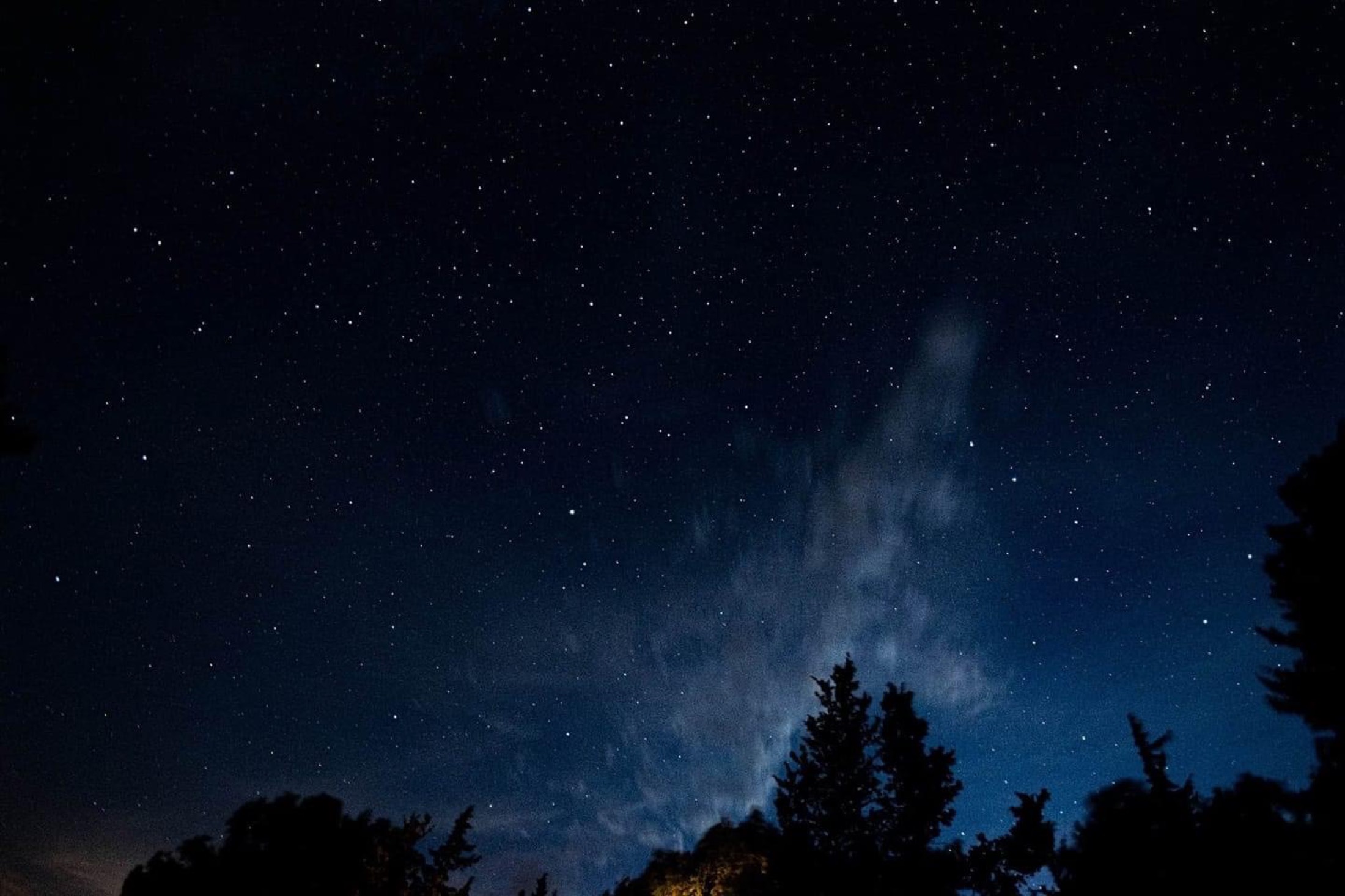
Pinery Provincial Park
Coastal dunes, rare oak savanna and 10 km of Lake Huron beach. Dark skies for stargazing.
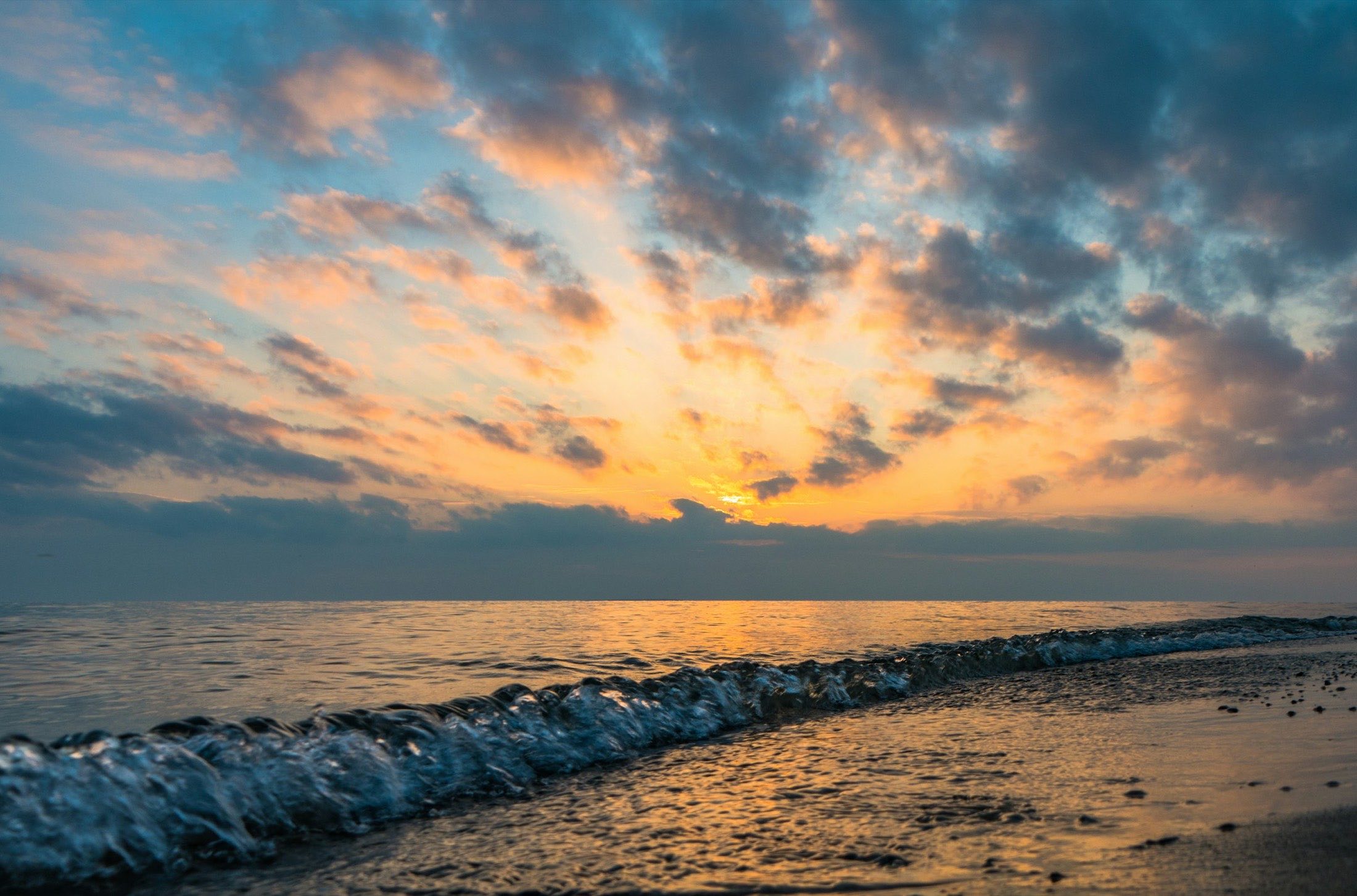
Grand Bend
Lake Huron's famous summer beach, a Blue Flag beach for 18 years running.
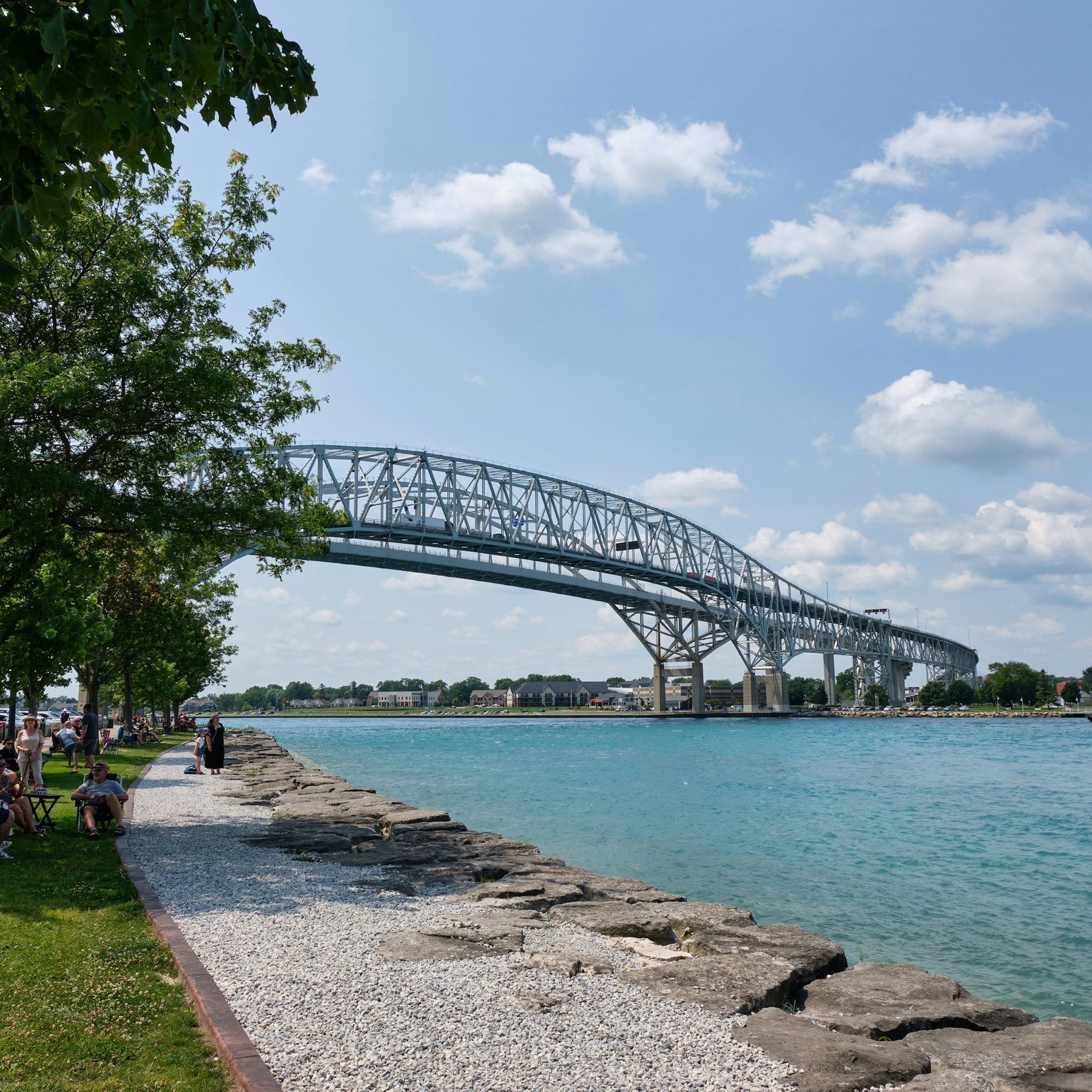
Point Edward Waterfront
Watch freighters pass under the Blue Water Bridge, right where Lake Huron becomes the river.
Canatara Park
Free Lake Huron beach and a Children's Animal Farm.
Celebration of Lights
Holiday light displays at Centennial Park on Sarnia Bay.
Imperial Theatre
An Art Deco theatre downtown, home of Theatre Sarnia.
Howard Watson Trail
A 16 km walking and cycling trail on an old rail line.
Rock Glen
A waterfall and an international fossil-viewing site.
Lambton Heritage Museum
County history, 8 km south of Grand Bend.
Moore Museum
Eleven pioneer-era buildings telling local history.
Aamjiwnaang Pow Wow
Dancing, drumming and food. Visitors welcome.
Also worth a drive: Ipperwash Beach, Forest, Thedford, Port Franks, Wyoming and the river towns south of Sarnia. Tourism Sarnia-Lambton · Ontario Parks